At a glance
- Typical payout40-70% of face value
- Best fitAdvanced cases often value higher
- Tax treatmentOften tax-free under §101(g)
- Timeline30-60 days to funds
- EligibilityPolicy ≥ $100K, 2+ years old
What patients with liver cancer should know
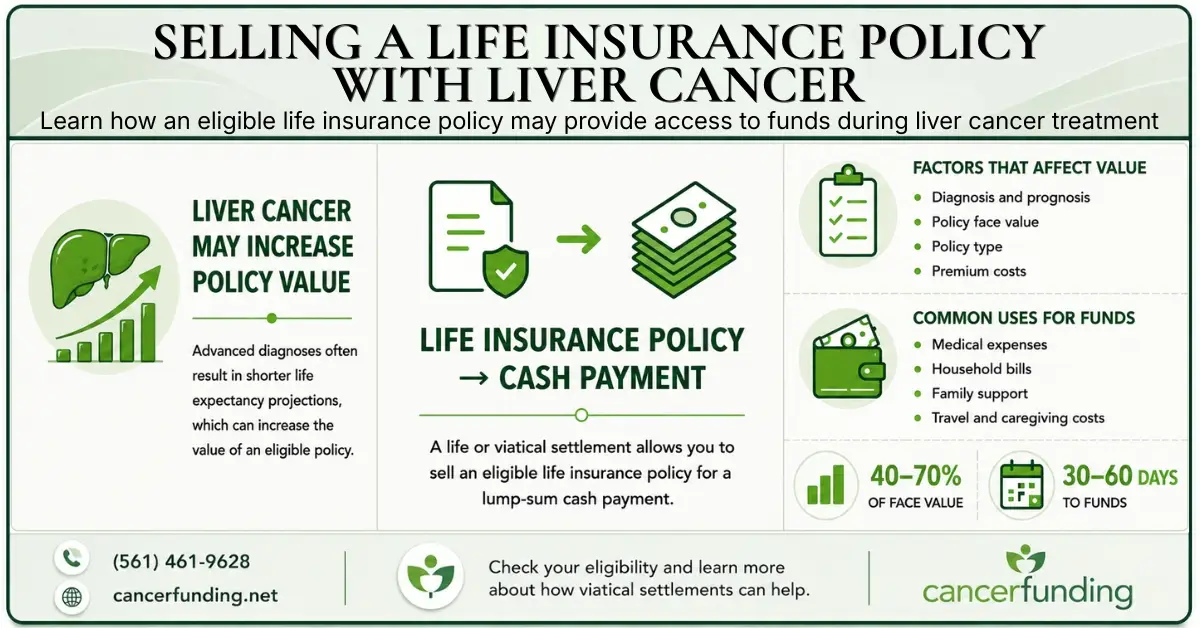
Liver cancer may actually increase a policy’s settlement value: advanced diagnoses often result in shorter life-expectancy projections, which can raise the value of an eligible policy.
Value is shaped by diagnosis and prognosis, policy face value, policy type, and premium costs. A life or viatical settlement lets you sell an eligible policy for a lump-sum cash payment, and qualifying cases may receive proceeds that are generally tax-free at the federal level under IRS §101(g).
How payout ranges work
On a $500,000 policy, a patient with liver cancer might receive between 40 and 70% of the face value, depending on stage, treatment trajectory, age, policy type, and carrier. That’s between $200,000 and $350,000 in cash, often delivered in 30-60 days from acceptance. Most patients receive substantially more than the policy’s cash surrender value.
What we’d recommend asking
- What’s the difference between a life settlement and a viatical settlement for my diagnosis?
- How will this affect my Medicaid eligibility?
- What documentation does the buyer need from my oncologist?
- Is there a rescission window if I change my mind?
- Are there better alternatives (policy loan, accelerated death benefit rider)?