If you are helping someone with cancer or another serious illness, you may wonder, can a caregiver help apply for a viatical settlement? Yes. A caregiver can assist with gathering policy information, completing paperwork, coordinating medical records, and communicating with the settlement provider. However, helping with the application does not give a caregiver the legal authority to sell someone else’s life insurance policy or sign documents on their behalf. The policy owner must approve the sale and sign the necessary documents unless a legally authorized representative is acting on their behalf.
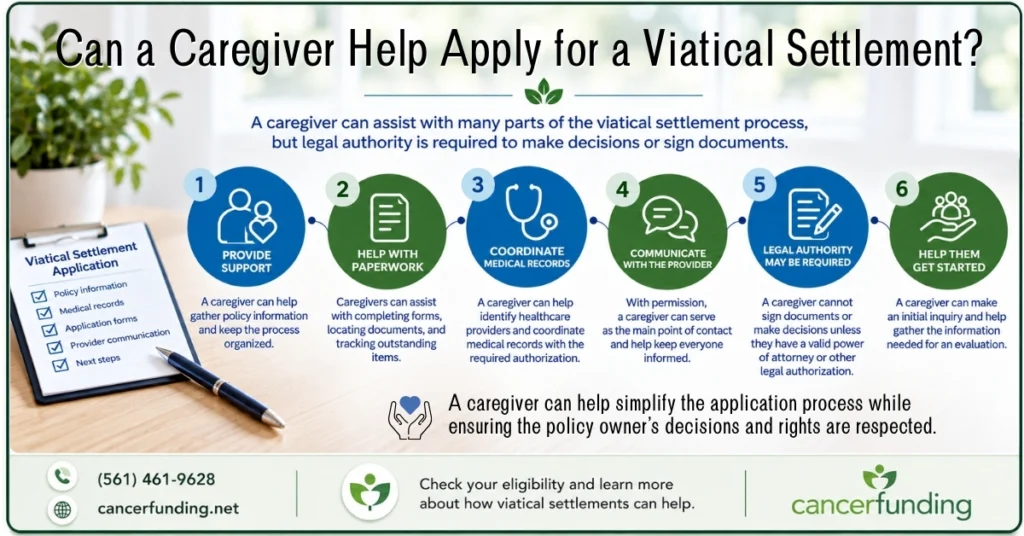
Understanding the difference between providing assistance and having legal authority can help caregivers and policy owners navigate the process more easily.
What Can a Caregiver Do During a Viatical Settlement?
A caregiver may be a spouse, adult child, relative, friend, or another trusted person who helps someone manage their needs during a serious illness. Caregivers can assist with many administrative aspects of a viatical settlement, particularly when the insured is undergoing treatment or has limited energy to manage financial paperwork.
A caregiver can help with:
- Locating the life insurance policy and recent statements
- Gathering information about premiums and the death benefit
- Helping complete application forms
- Identifying physicians and treatment facilities
- Coordinating medical record requests
- Tracking outstanding documents
- Communicating with the settlement provider when authorized
This assistance can reduce the administrative burden on someone dealing with a serious illness while allowing the policy owner to remain involved in the decisions about their life insurance.
Can a Caregiver Start the Viatical Settlement Application?
Yes. A caregiver can make an initial inquiry to determine whether a life insurance policy may qualify. The preliminary discussion may involve basic information about the policy, including its type, death benefit, premiums, and the insured’s medical circumstances.
A caregiver can also help gather the information needed for a formal evaluation. However, the settlement provider must obtain the appropriate authorization before accessing confidential policy information, requesting medical records, or disclosing protected information to the caregiver. Making an initial inquiry does not obligate the policy owner to sell the policy.
Can a Caregiver Sign Viatical Settlement Documents?
Being someone’s caregiver, spouse, adult child, or beneficiary does not give them the authority to sell that person’s life insurance policy. The policy owner must approve the transaction and sign the necessary documents unless a legally authorized representative has the authority to act on their behalf.
If the caregiver is also the policy owner, they can authorize the sale and sign the documents, provided all applicable transaction requirements are satisfied. If someone else owns the policy, the caregiver must have appropriate legal authority to sign on that person’s behalf.
This distinction is important because a viatical settlement transfers ownership of the policy and changes who receives its death benefit, except when a retained death benefit arrangement preserves a portion for designated beneficiaries.
Can Someone Apply for a Viatical Settlement Using Power of Attorney?
Yes, a person acting under a valid power of attorney can complete a viatical settlement on behalf of the policy owner if the document grants sufficient authority for the transaction and all applicable legal requirements are satisfied. The settlement provider and life insurance company must verify that the representative has the necessary authority before accepting documents signed on the owner’s behalf.
If the policy owner is physically unable to sign but retains the capacity to understand and authorize the transaction, an appropriate signing procedure must be established. If the policy owner lacks the legal capacity to authorize the sale, a representative with legally recognized authority must act on their behalf.
Caregivers who intend to sign documents should provide their power of attorney or other legal authorization early in the process so their authority can be reviewed before closing.
Can a Caregiver Help Obtain Medical Records?
Yes. Medical records are an important part of evaluating a viatical settlement because they provide information about the insured’s diagnosis, treatment, overall health, and prognosis. A caregiver can help identify the physicians, specialists, hospitals, and treatment centers involved in the insured’s care.
The insured or an appropriately authorized representative must provide the necessary authorization for medical records to be released for the evaluation, unless another applicable legal basis permits disclosure. Once the required authorization is completed, the settlement provider can request records directly from healthcare facilities. Caregivers do not need to collect every medical record themselves.
For more information, see our article, What Medical Records Are Needed for a Viatical Settlement?
Can a Caregiver Communicate Directly with the Settlement Provider?
Yes, with the appropriate permission. A caregiver can serve as the primary point of contact, helping coordinate paperwork, respond to requests, and keep the policy owner informed.
The settlement provider must have the appropriate authorization or another valid legal basis before disclosing confidential policy, medical, or transaction information to the caregiver. Establishing these communication permissions at the beginning can help the process move forward without unnecessary delays.
What If the Caregiver Is Also the Life Insurance Beneficiary?
Being named as a beneficiary does not give someone ownership rights or the authority to sell a life insurance policy. In a standard viatical settlement, the buyer becomes the new owner and beneficiary. The original beneficiaries no longer receive the policy’s death benefit once the beneficiary change is completed.
In some cases, a retained death benefit arrangement allows a portion of the death benefit to remain available to designated beneficiaries. If the caregiver is a beneficiary, it is important to understand how the proposed settlement will affect their interest in the policy. When a beneficiary has irrevocable rights, the required consent must be obtained before proceeding with a transaction that affects those rights.
Does the Caregiver Receive the Settlement Money?
Viatical settlement proceeds belong to the person or entity that owns and sells the life insurance policy.
If a caregiver is acting under a power of attorney, the proceeds still belong to the policy owner and must be handled according to the representative’s legal responsibilities. The settlement documents establish the payment arrangements and identify the appropriate recipient.
How Can a Caregiver Help Someone Get Started?
The first step is to determine who owns the life insurance policy and confirm that the owner wants to explore a viatical settlement. A caregiver can then help gather basic policy information, identify the insured’s healthcare providers, and contact the settlement provider for an initial evaluation.
Whole life, universal life, and certain term life insurance policies may qualify. A policy can have settlement value even if it has little or no cash surrender value. The evaluation considers the insured’s health, estimated life expectancy, policy death benefit, and future premium requirements.
If the caregiver will be communicating or signing on behalf of the policy owner, the required permissions and legal authority must be established before those activities take place. A caregiver can manage much of the administrative work while the policy owner retains control over the decision to sell, unless a legally authorized representative is acting on their behalf.
To learn if you or someone you care for may qualify for a viatical settlement to help with expenses, please reach out to Settlement Group, a licensed life settlement provider at 754-296-9034, email inquiries@settlementgroup.io, or visit settlementgroup.io.