A serious illness can create expenses that health insurance does not fully cover, from deductibles and copays to medications, travel, home care, and everyday living costs. Can you use life insurance to pay medical bills? In some circumstances, yes. Depending on the type of life insurance policy you own and its provisions, you may be able to access money from the policy while you are still living.
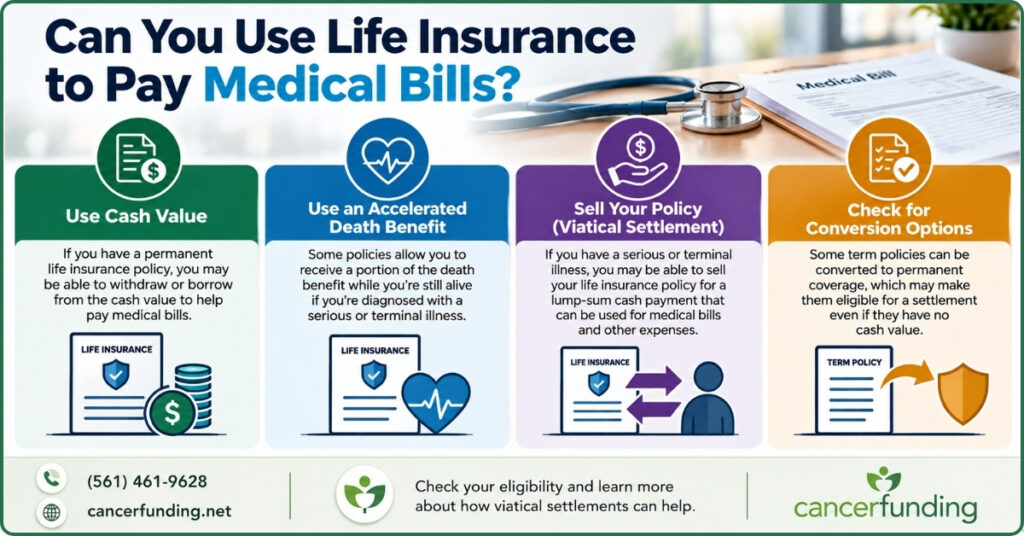
Options can include withdrawing or borrowing against cash value, using an accelerated death benefit, or selling the policy through a viatical settlement. The amount available and the effect on the policy can vary significantly, so it is important to understand how each option works.
How Can You Get Money from Life Insurance While You Are Still Alive?
Life insurance is primarily designed to provide a death benefit to beneficiaries, but some policies can provide cash resources during the insured person’s lifetime.
The options available depend on factors such as the type of policy, its cash value, the insured’s health, and the specific provisions included in the contract. Common ways of accessing value include:
- Withdrawing available cash value
- Taking a policy loan
- Using an accelerated death benefit
- Selling the policy through a life or viatical settlement
These options work differently, and not every policy owner will qualify for all of them.
Can You Withdraw Money from the Cash Value of a Life Insurance Policy?
Permanent life insurance policies, such as whole life and some universal life policies, may accumulate cash value. Depending on the policy, the owner may be able to withdraw some of that money or borrow against it.
A withdrawal or policy loan can provide money for medical bills without selling the policy. However, accessing cash value may reduce the policy’s death benefit, and outstanding loans can affect the amount ultimately paid to beneficiaries. Loans can also accrue interest.
Term life insurance does not accumulate cash value, so withdrawals and policy loans usually are not available with a term policy.
Can an Accelerated Death Benefit Help Pay Medical Bills?
Some life insurance policies include an accelerated death benefit, sometimes called a living benefit. This provision allows an eligible policy owner to receive a portion of the death benefit before the insured dies.
Eligibility requirements are established by the insurance company and may be based on factors such as a terminal illness diagnosis or life expectancy. The amount that can be accessed also varies by policy.
An accelerated death benefit can be valuable for someone facing significant medical expenses, but not everyone qualifies. Even when the benefit is available, the amount offered may be less than the policy owner needs.
If you do not qualify for an accelerated death benefit, that does not necessarily mean you cannot access value from your policy another way.
Can You Sell Your Life Insurance Policy to Pay Medical Bills?
A life insurance policy is an asset and eligible policy owners may be able to sell it to a third party for a lump-sum cash payment. For someone with a serious or terminal illness, this transaction may qualify as a viatical settlement.
After a completed settlement, the purchaser becomes the policy owner and assumes responsibility for future premiums. In exchange, the original policy owner receives a cash payment that is more than the policy’s cash surrender value but less than its death benefit.
The settlement proceeds can be used for medical bills, but they are not restricted to medical expenses. The money can also be used for housing, groceries, transportation, caregiving, debt, travel, or anything else the policy owner chooses.
Can You Sell a Term Life Insurance Policy to Pay Medical Bills?
A term policy may have no cash value at all and still have value in a life insurance settlement.
One important factor is whether the term policy can be converted to permanent insurance. Many term policies include a conversion provision that allows the policy owner to convert the coverage without undergoing new medical underwriting, provided the conversion requirements and deadlines are met.
For someone who has developed cancer or another serious illness since purchasing the policy, this feature can be especially important. A policy that appears to have no value while the insured is living may still qualify for a settlement.
How Much Money Can You Get from a Life Insurance Policy?
There is no single amount that applies to every policy. The value of a potential settlement depends on several factors, including:
- The policy’s death benefit
- The cost of future premiums
- The type and terms of the policy
- The insured person’s age and health
- Life expectancy
- Current market conditions
The settlement value is separate from the policy’s cash value. This distinction is particularly important because a policy with little or no cash surrender value may still have significant value in the secondary market.
Is It Better to Use a Viatical Settlement or Keep the Life Insurance Policy?
That depends on why you own the policy and what you need now.
Keeping the policy may make sense when the death benefit remains important to your beneficiaries and the premiums are affordable. Accessing cash value or an accelerated death benefit may allow you to obtain some money while maintaining the policy.
A viatical settlement may be worth considering when current financial needs have become more important than maintaining the full death benefit, premiums are becoming difficult to afford, or other ways of accessing the policy do not provide enough money.
In some transactions, it may also be possible to structure a retained death benefit, allowing the policy owner to receive settlement proceeds while preserving a portion of the death benefit for beneficiaries.
What Medical Expenses Can Life Insurance Money Be Used For?
Money obtained from a life insurance settlement can be used however the policy owner chooses. For someone undergoing cancer treatment, that could include expenses such as deductibles, copays, prescription medications, treatment not fully covered by insurance, transportation, lodging near a treatment center, home care, or household expenses while unable to work.
That flexibility can be important because the financial effects of cancer often extend well beyond the medical bills themselves.
How Do You Find Out Whether Your Life Insurance Policy Can Help?
Start by reviewing the type of policy you own, its death benefit, premiums, cash value, and any accelerated death benefit or conversion provisions. If you are considering a viatical settlement, the policy can also be evaluated to determine whether it may qualify and what it could be worth.
Requesting an evaluation does not require you to sell the policy. It can simply help you understand whether your life insurance represents a source of funds you had not previously considered.
To learn if you may qualify for a viatical settlement to help with expenses, please reach out to Settlement Group, a licensed life settlement provider at 754-296-9034, email inquiries@settlementgroup.io, or visit settlementgroup.io.