A cancer diagnosis often brings more than medical decisions. It can also create significant financial stress, as many people search for ways to pay for treatment, replace lost income, or reduce financial pressure on their families. Can you sell your life insurance policy while undergoing cancer treatment? The answer may be yes. Depending on your policy and your medical situation, a viatical settlement could allow you to sell your life insurance policy for a lump sum cash payment that can be used for virtually any purpose.
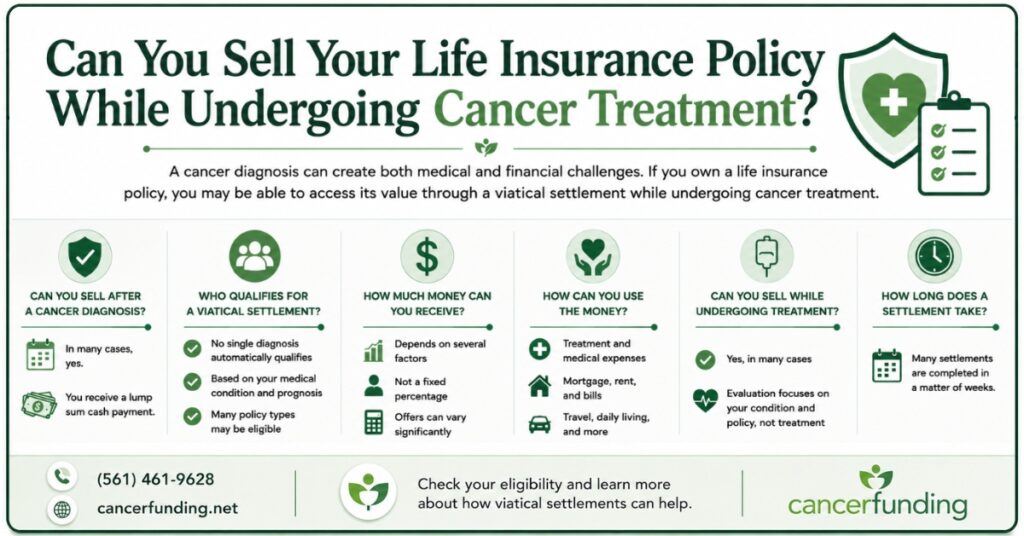
Can You Sell Your Life Insurance Policy After a Cancer Diagnosis?
In many cases, yes.
A viatical settlement allows someone with a serious illness to sell an existing life insurance policy to a licensed buyer in exchange for a cash payment. After the sale, the buyer becomes the owner and beneficiary of the policy, assumes responsibility for future premium payments, and receives the death benefit when the insured passes away.
Not everyone who has cancer will qualify, but many individuals with advanced or serious forms of cancer may be eligible. Eligibility is based on several factors, including:
- Your overall medical condition
- The type and stage of cancer
- Your prognosis
- The type of life insurance policy you own
- The policy’s face value
- The cost of future premiums
Every case is unique, so the only way to know whether your policy may qualify is to have it evaluated.
Who Qualifies for a Viatical Settlement?
There is no single diagnosis that automatically qualifies or disqualifies someone. Instead, buyers evaluate the overall medical circumstances along with the details of the insurance policy. Many people who are actively receiving treatment for advanced cancer may qualify, while others with earlier stage cancers may not.
A variety of policy types may be eligible, including:
- Whole life insurance
- Universal life insurance
- Convertible Term life insurance policies
- Some Group policies
Even if you are unsure whether your policy qualifies, it may be worthwhile to have it evaluated.
How Much Money Can You Receive for a Life Insurance Policy?
The amount offered depends on several factors rather than a fixed percentage of the policy’s death benefit. Factors that may influence the value include:
- The face amount of the policy
- Your age
- Your current health
- Your life expectancy
- Premium costs
- The specific policy provisions
Because every situation is different, offers can vary significantly. A professional policy evaluation can provide a better understanding of what your policy may be worth.
How Can You Use the Money from a Viatical Settlement?
One of the advantages of a viatical settlement is flexibility. Unlike many financial assistance programs, there are generally no restrictions on how the funds are used.
People often use the proceeds to help pay for:
- Cancer treatments
- Health insurance deductibles and coinsurance
- Experimental or specialized therapies
- Prescription medications
- Travel for treatment
- Mortgage or rent payments
- Household bills
- Home health care
- Hospice care
- Everyday living expenses
Some families also choose to use the funds to reduce financial stress so they can focus more fully on spending time together during treatment.
Can You Sell a Life Insurance Policy While Receiving Chemotherapy or Radiation?
Yes, in many cases.
Receiving chemotherapy, radiation, immunotherapy, targeted therapy, or other treatments for cancers does not automatically prevent someone from qualifying for a viatical settlement. In fact, many applicants are actively undergoing treatment during the evaluation process. The evaluation focuses on your overall medical condition and the insurance policy itself, rather than whether you are currently receiving treatment.
It is worth noting that because eligibility and offer amounts are tied to prognosis, a significant improvement in your health can change the outcome. Someone whose treatment is working well may receive a lower offer than they would have earlier in their diagnosis, or may no longer qualify for a viatical settlement at all. This is one reason many people choose to explore their options sooner rather than later.
How Long Does a Viatical Settlement Take?
Every case is different, but once all required documentation has been received, many viatical settlements can be completed within a matter of weeks. The timeline often depends on factors such as:
- Obtaining medical records
- Reviewing the insurance policy
- Completing underwriting
- Returning signed paperwork
Providing requested documents promptly can help keep the process moving efficiently.
Is Selling Your Life Insurance Policy the Right Choice?
A viatical settlement is not the right solution for everyone, but it can provide meaningful financial relief for some individuals facing cancer. Selling a policy means your beneficiaries generally will no longer receive the policy’s death benefit because ownership transfers to the buyer. For that reason, it’s important to understand how the transaction works before making a decision.
For many families, however, receiving money when it is needed most can provide greater value than maintaining a policy that may no longer fit their financial priorities.
Learn Whether Your Policy May Qualify
If you are undergoing cancer treatment and own a life insurance policy, it may be worth finding out whether you qualify for a viatical settlement. A policy review can help determine whether your policy is eligible and provide an estimate of its potential value.
For many cancer patients, accessing the value of an existing life insurance policy can provide funds for treatment, household expenses, or other financial needs, allowing them to focus more on their care and less on financial uncertainty.
A no-obligation policy review is available through Settlement Group, a licensed life settlement provider. Call (754) 296-9034, email inquiries@settlementgroup.io, or visit settlementgroup.io.