Georgia at a glance
- StatuteO.C.G.A. §33-59
- Rescission window15 days
- Medicaid asset limit$2,000
- RegulatorGeorgia Dept. of Insurance
- Licensed providersMultiple
How life settlements work in Georgia
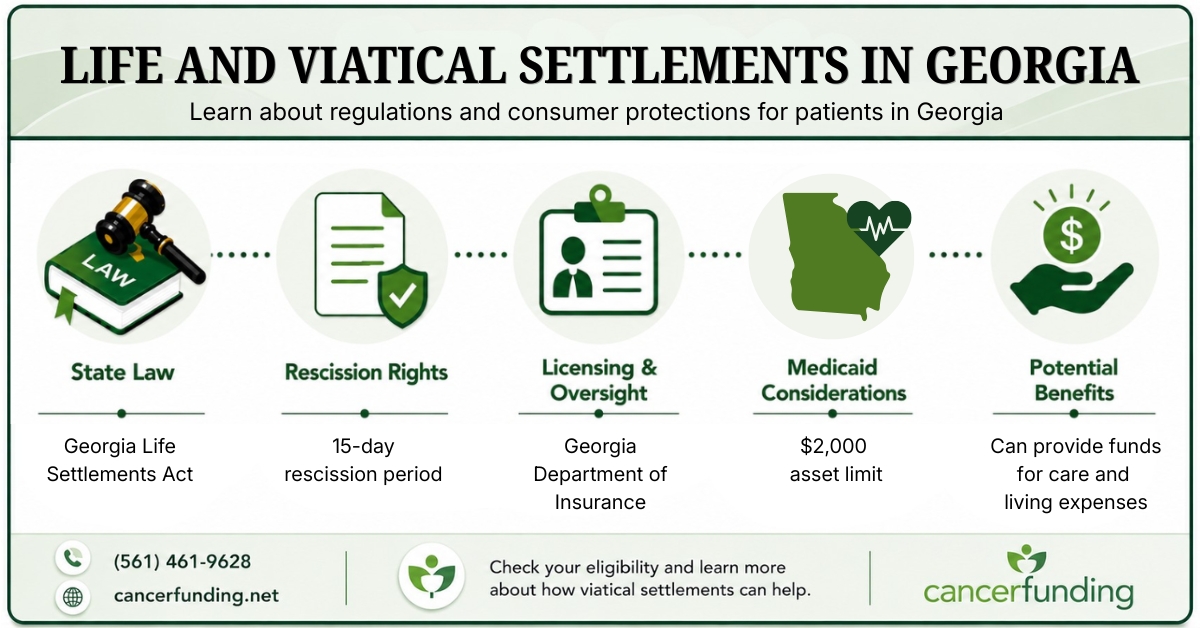
Life and viatical settlements in Georgia are regulated under O.C.G.A. §33-59. The Georgia Department of Insurance licenses both viatical providers and brokers, and requires written disclosures, a 15 days rescission period, and standardized contract forms.
For cancer patients in Georgia, the most common path is a viatical settlement under IRS §101(g), where proceeds are tax-free at the federal level if you’re certified as terminally or chronically ill. Georgia conforms to federal tax treatment for these settlements.
Medicaid impact in Georgia
Georgia’s Medicaid asset limit is currently $2,000 for individuals (2026). A lump-sum settlement that exceeds this limit can disqualify you from coverage. Specialized trust structures (special needs trusts, pooled trusts) can preserve eligibility but must be established before proceeds arrive.
This is the single most important planning step for Georgia patients receiving a settlement. We’ll connect you with a Georgia elder law attorney if you’d like guidance.
What’s different about Georgia
- Rescission period: 15 days from contract signing to change your mind
- Required disclosures: Buyers must provide written disclosures including alternatives (loan, surrender, ADB rider)
- Privacy: Medical and policy information is HIPAA-protected throughout
- Tax treatment: Georgia follows federal §101(g) for viatical proceeds
Major Georgia cities we serve
Statewide. Our licensed specialists work with policies throughout Georgia, with no in-person meetings required. Documentation, signatures, and notarization can all happen remotely.