If you are considering selling your life insurance because of a serious illness, you may wonder, what happens to your life insurance policy after a viatical settlement? Once the transaction is completed, ownership of the policy generally transfers to the buyer. The buyer becomes responsible for keeping the policy in force, including paying future premiums, and receives the death benefit when the insured dies. In exchange, the original policy owner receives the agreed-upon viatical settlement payment.
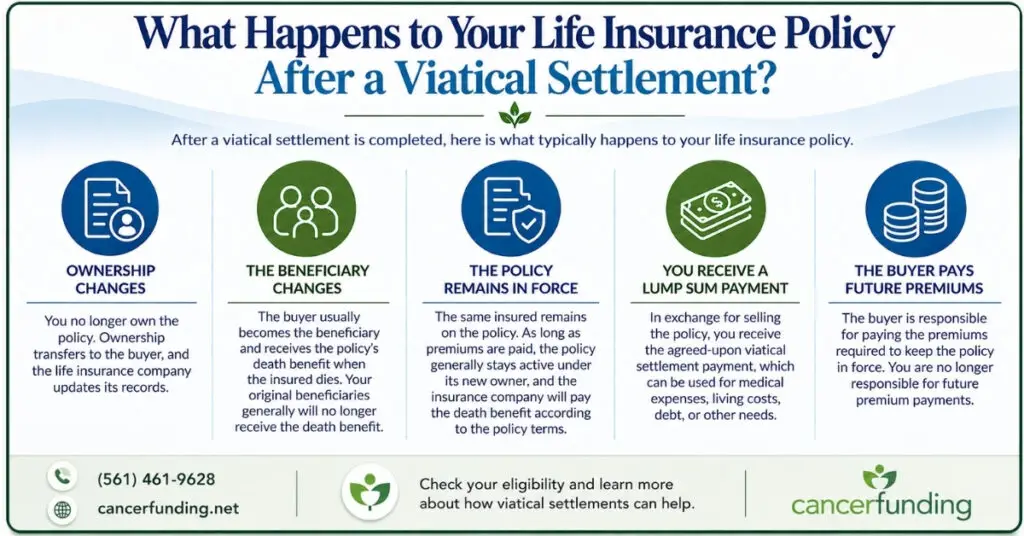
Understanding what happens after the sale can help you decide whether a viatical settlement makes sense for you and your family.
Who Owns the Life Insurance Policy After a Viatical Settlement?
After a viatical settlement closes, the original policy owner generally no longer owns the life insurance policy.
Ownership is transferred to the buyer as part of the settlement process. The life insurance company records the ownership change and, in most cases, the beneficiary designation is also changed.
This is an important distinction between a viatical settlement and simply accessing money that has accumulated within a permanent life insurance policy. A viatical settlement is a sale of the policy, not a loan against it.
Once the transaction is complete, the buyer has the rights associated with ownership of the policy, subject to the terms of the policy and applicable laws.
Who Pays the Life Insurance Premiums After a Viatical Settlement?
After the sale is completed, the buyer is generally responsible for paying future premiums required to keep the policy in force.
This can provide financial relief for someone who has been paying substantial premiums for coverage they no longer need or can no longer comfortably afford.
Premium costs are also an important part of determining the value of a policy before the sale. A buyer considering the purchase of a policy evaluates not only the policy’s death benefit, but also the amount that may need to be paid in future premiums.
Once the policy has been sold, those future premium payments are no longer the responsibility of the original policy owner.
Who Gets the Death Benefit After a Viatical Settlement?
In a standard viatical settlement, the buyer becomes the beneficiary of the life insurance policy and receives the death benefit when the insured dies.
The original beneficiaries, such as a spouse, children, or other family members, generally will no longer receive the policy’s death benefit after the policy has been sold.
This is one of the most important factors to consider before accepting a viatical settlement. The policy owner receives money while the insured is living in exchange for giving up the policy and its future death benefit.
However, selling the entire death benefit is not always the only option.
Can You Keep Part of the Death Benefit for Your Family?
In some cases, a retained death benefit may be available.
A retained death benefit can allow the policy owner to receive a settlement payment while preserving a portion of the policy’s death benefit for designated beneficiaries.
For example, someone facing significant expenses because of cancer or another serious illness may want access to some of the value of the policy now, but still want to leave a portion of the life insurance benefit to family members.
This option is usually only available for larger policies. If keeping some life insurance for your beneficiaries is important to you, ask whether a retained death benefit is possible before accepting an offer.
Does the Life Insurance Policy Stay Active After It Is Sold?
Yes. The policy generally remains in force after a viatical settlement.
The difference is that the policy has a new owner and beneficiary. The buyer continues paying the required premiums so the coverage remains active.
The insured remains the same person. A viatical settlement does not create a new life insurance policy or change who is insured.
As long as the policy remains in force and its requirements are met, the insurance company will ultimately pay the applicable death benefit according to the policy terms.
What Happens to the Cash Value of the Policy?
If a permanent life insurance policy has cash value, that value is generally part of the policy that is transferred when the policy is sold.
This is one reason it is useful to compare a potential viatical settlement with the alternatives available under the policy. Depending on the policy, those alternatives could include accelerated death benefits if you qualify, surrendering it for its cash surrender value, borrowing against available cash value, reducing coverage, or keeping the policy in force.
A viatical settlement may provide more than the policy’s cash surrender value, but the amount depends on the individual policy and the insured’s circumstances.
What Happens If You Change Your Mind After a Viatical Settlement?
The ability to change your mind depends on where you live and the applicable rules.
Many states provide a rescission period after a life or viatical settlement is completed. During this period, the policy owner may have the right to cancel the transaction if the required conditions are met.
The length and requirements of the rescission period vary by state. Your settlement documents should explain any cancellation rights that apply to your transaction.
Once the applicable rescission period has passed, you cannot simply ask for the policy back because you later decide that you would prefer to keep it.
Will You Still Have Contact with the Life Insurance Company?
Once ownership has transferred, the buyer generally handles matters associated with owning and maintaining the policy.
However, the insured may still receive certain communications or requests related to the policy. For example, there may be occasional requests for information about the insured’s health or status after the settlement.
The requirements and frequency of this contact can vary. Applicable laws may place limits on how often an insured can be contacted and how those communications are handled.
The settlement documents should explain what you can expect after the transaction closes.
Can the Buyer Cancel the Policy After a Viatical Settlement?
As the new owner, the buyer generally has ownership rights over the policy. However, the financial purpose of purchasing a policy through a viatical settlement is generally to keep the coverage in force.
If required premiums are not paid and the policy lapses, the death benefit could be lost. For that reason, maintaining the policy is an important responsibility of the new owner.
The original policy owner is no longer responsible for ensuring that premiums are paid after the completed sale.
Do You Have to Pay Back the Viatical Settlement Money?
A viatical settlement is a sale rather than a loan, so the settlement payment does not have to be repaid.
Once the transaction is completed and any applicable rescission period has passed, the money received belongs to the seller and can generally be used for any purpose.
For someone with cancer or another qualifying illness, the proceeds may help with medical treatment, prescription medications, housing, travel, caregiving, debt, or everyday expenses.
If you receive Medicaid or another needs-based government benefit, however, receiving a lump-sum payment could potentially affect eligibility. It is important to understand how the proceeds may affect your particular benefits before accepting a settlement.
What Should You Consider Before Selling Your Life Insurance Policy?
A viatical settlement can provide access to money during a serious illness, but selling a policy changes what that life insurance will provide in the future.
Before accepting an offer, make sure you understand:
- How much you will receive from the settlement
- Whether a retained death benefit is available if desired
- Whether the proceeds could affect needs-based benefits
- What alternatives may be available under your existing policy
For many people, the central question is whether having access to money now is more valuable than keeping the full death benefit for the future. That decision depends on your financial needs, your policy, and what you want the life insurance to accomplish for you and your family.
What Happens After You Accept a Viatical Settlement Offer?
Once you accept an offer, the required closing documents are completed and the ownership and beneficiary changes are processed. After the conditions for closing have been satisfied, the settlement proceeds are released according to the terms of the transaction.
From that point forward, the buyer generally owns the policy, pays the premiums, and ultimately receives the death benefit. You receive the agreed-upon cash payment and no longer have responsibility for maintaining the policy.
If a retained death benefit is part of the arrangement, the designated beneficiaries may still receive the a portion of the death benefit when the insured dies.
Knowing exactly what happens to the policy after the sale is an important part of evaluating a viatical settlement. It allows you to weigh the value of receiving money during your lifetime against the benefits you would otherwise leave behind.
To learn if you may qualify for a viatical settlement to help with expenses, please reach out to Settlement Group, a licensed life settlement provider at 754-296-9034, email inquiries@settlementgroup.io, or visit settlementgroup.io.