A cancer diagnosis can raise important questions about life insurance, particularly when treatment expenses and financial uncertainty become difficult to manage. One common question is, does life insurance pay out for cancer? The answer depends on the type of policy you own, the benefits it includes, and whether you are looking for financial assistance while living or a death benefit for your beneficiaries.
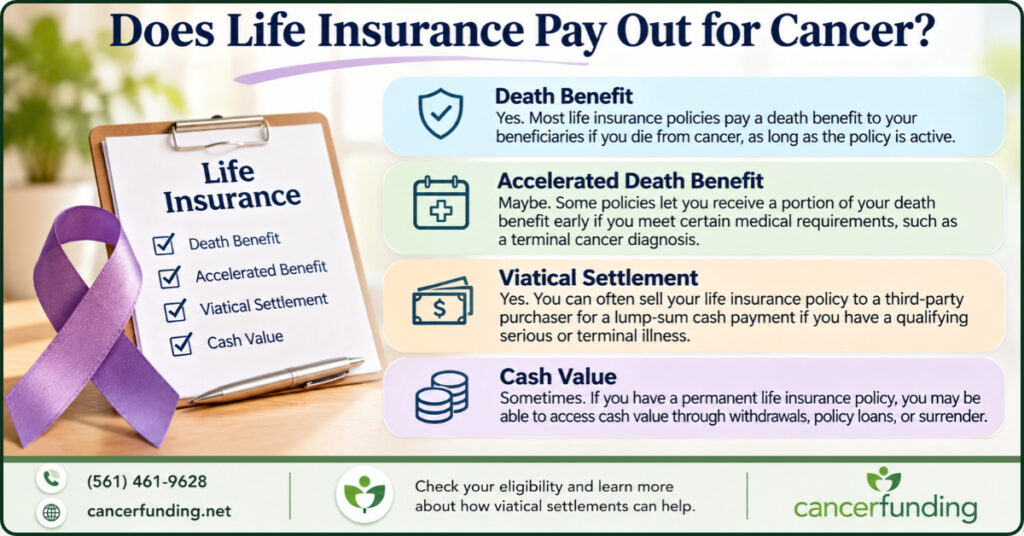
Traditional life insurance generally pays a death benefit after the insured person dies, including when cancer is the cause of death. However, certain policies and financial arrangements may allow qualifying individuals to access money from their life insurance while they are still alive.
Does Life Insurance Cover Death Caused by Cancer?
Most life insurance policies cover death resulting from cancer, provided the policy remains active and its terms have been satisfied. If the insured person dies from cancer, the designated beneficiaries generally receive the policy’s death benefit.
A cancer diagnosis after purchasing life insurance does not ordinarily change the death benefit or cause an insurer to cancel an existing policy. However, coverage can be affected by circumstances such as unpaid premiums or material misrepresentations on the original insurance application.
Policies typically include a contestability period, often the first two years after coverage begins, during which the insurer may investigate certain application statements. A cancer diagnosis does not automatically prevent payment, but inaccurate information provided when applying for coverage could create complications.
Can Life Insurance Pay Out While You Are Still Alive?
Although life insurance is primarily designed to provide money to beneficiaries after death, some policies offer ways to access funds while the insured person is living. These options may be particularly relevant to someone facing a serious cancer diagnosis.
An accelerated death benefit is one possibility. Some life insurance policies include a provision allowing qualifying policyholders to receive a portion of their death benefit early if they meet specific medical requirements, such as a terminal illness diagnosis.
The amount available and eligibility requirements depend on the insurance contract. Receiving an accelerated death benefit generally reduces the amount remaining for beneficiaries after death.
Another option is a viatical settlement, which involves selling an existing life insurance policy to a third-party purchaser for a lump-sum payment. Unlike an accelerated death benefit, the payment comes from the purchaser rather than the insurance company.
Does Life Insurance Pay Out for Terminal Cancer?
A person diagnosed with terminal cancer may have additional options for accessing the value of an existing life insurance policy. If the policy includes an accelerated death benefit, the insured person may qualify to receive funds directly from the insurer before death.
A viatical settlement may also be available. Viatical settlements are designed for individuals with qualifying serious or terminal illnesses who wish to sell their life insurance policies in exchange for an immediate cash payment.
Eligibility depends on several factors, including the insured person’s medical condition, estimated life expectancy, policy death benefit, and future premium requirements. A terminal diagnosis does not automatically guarantee eligibility or a particular settlement amount.
For qualifying individuals, a viatical settlement may provide substantially more than the policy’s cash surrender value. However, selling the policy generally means that the purchaser becomes entitled to the death benefit, rather than the original beneficiaries.
What if Your Life Insurance Policy Does Not Have an Accelerated Death Benefit?
Not every life insurance policy includes an accelerated death benefit, and some policies have medical requirements that a particular cancer diagnosis may not satisfy. Even if an insurer does not offer an early payout, the policy may still have value through a life settlement.
A viatical settlement does not require the life insurance company to offer an accelerated benefit. Instead, a licensed life settlement provider can evaluate the policy to determine whether a third-party purchaser may be interested in acquiring it.
Both permanent life insurance and certain term life insurance policies may qualify. In some cases, a term policy with a conversion privilege can be converted into permanent coverage, potentially making it eligible for settlement consideration.
Can You Receive Money from Life Insurance Without Dying?
Are benefits only available after death or can you cash out life insurance while you’re still alive? In addition to accelerated death benefits and viatical settlements, certain permanent life insurance policies accumulate cash value that policyholders may be able to access while living. Depending on the policy, this may be possible through withdrawals, policy loans, or surrender.
Cash value is different from the death benefit. It represents value accumulated within certain permanent insurance contracts, and accessing it may reduce the death benefit or affect the policy’s continued coverage. Loans and withdrawals can also have tax implications.
A viatical settlement is different because the policy is sold to a purchaser rather than borrowed against or surrendered to the insurer. For qualifying individuals with serious illnesses, the settlement amount may exceed the available cash surrender value, although offers depend on the individual policy and medical circumstances.
Does Life Insurance Pay Out for Cancer Treatment?
Traditional life insurance does not generally pay medical expenses simply because the insured person has been diagnosed with cancer. Unless the policy includes an applicable living benefit, its death benefit is intended to be paid after death.
However, money received through an accelerated death benefit or viatical settlement may be used to help cover cancer treatment and other financial needs. Viatical settlement proceeds generally have no restrictions requiring the funds to be spent on specific expenses.
For someone facing substantial medical bills, reduced income, or additional household expenses, accessing the value of an existing policy may provide financial flexibility. Before choosing an option, it is important to consider how the transaction could affect beneficiaries, taxes, and eligibility for needs-based government benefits.
How Can You Find Out if Your Life Insurance Policy Qualifies for an Early Payout?
Start by reviewing your policy to determine whether it includes an accelerated death benefit or other living benefit provisions. Your insurance company can explain the eligibility requirements and whether your medical circumstances qualify for benefits under the contract.
If you do not qualify for an accelerated death benefit, or want to explore other options, a life settlement evaluation may help determine whether your policy has value in the secondary market. A licensed provider can review the death benefit, policy type, premiums, and medical information to assess potential eligibility.
A cancer diagnosis does not necessarily mean your life insurance company will pay benefits immediately, but it may create opportunities to access the value of coverage you already own. Understanding the differences between death benefits, accelerated benefits, and viatical settlements can help you make an informed decision about your policy.
To learn if you may qualify for a viatical settlement to help with expenses, please reach out to Settlement Group, a licensed life settlement provider, at 754-296-9034, email inquiries@settlementgroup.io, or visit settlementgroup.io.